I am Mark Patton and running for the open seat on the Lower Platte South NRD. I have also been an active member and technical contributor to the coalition Cass County, Our Water, Our Future.
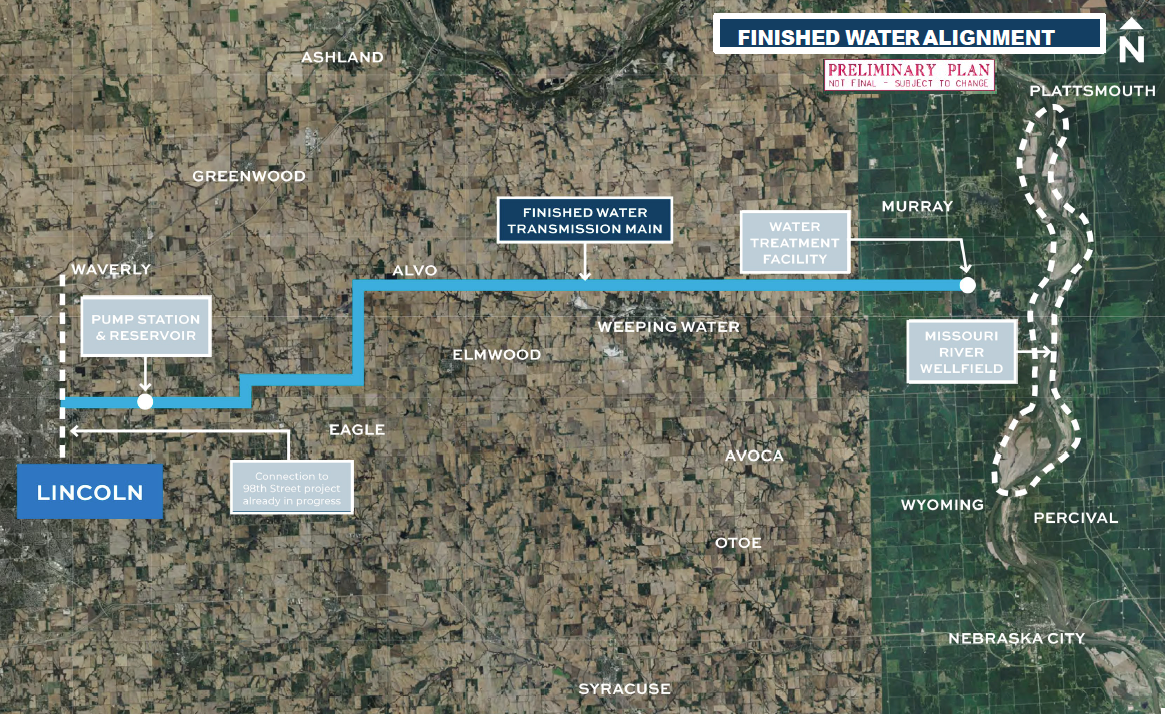
Lincoln Water 2.0, also called the Lincoln Second Source Water Supply Project, is the City of Lincoln’s estimated $1.3 billion plan to develop a second municipal water source in eastern Cass County. The project would withdraw groundwater from aquifers along the Missouri River, treat that water at a new facility in Cass County, and transport it through a large transmission pipeline across Cass and Lancaster counties to Lincoln. The proposed system is being designed for an initial treatment capacity of approximately 40 million gallons per day, with potential future expansion.
What should be the role of the Lower Platte South Natural Resources District (LPSNRD) in what may become the largest public utility infrastructure project in Cass County’s history?
Nebraska’s Natural Resources Districts were established by the Legislature and assigned 12 statutory purposes. Under Nebraska Revised Statute § 2-3229, several are particularly relevant to Water 2.0, including:
- Water supply for any beneficial uses.
- Development, management, utilization, and conservation of groundwater and surface water.
- Pollution control and solid waste disposal.
- Development and management of fish and wildlife habitat.
These responsibilities extend well beyond the permitting of large groundwater wells. The LPSNRD has an important role in managing water resources, protecting existing groundwater users, and helping communities address long-term water quality and quantity challenges.
The District also has a legitimate interest in how construction of a major water treatment facility and transmission pipeline may affect streams, wetlands, drainage, and other natural resources.
These considerations should be integrated into project planning today, not addressed only after major decisions have already been made.
Lincoln Water 2.0 may be years away from becoming operational, but significant project decisions and investments are already underway. The City has made large property acquisitions for the proposed wellfield and treatment facility. Pipeline route exhibits are being finalized and provided to affected landowners, and permanent easement acquisition activities are progressing. Environmental studies and engineering work are also underway.
Water may not flow through this system for another decade but decisions affecting Cass County are being made today.
The LPSNRD should be actively engaged in those decisions now.
Cass County, Our Water, Our Future is a citizen coalition focused on promoting transparency, accountability, and equitable consideration of both the benefits and impacts associated with Water 2.0.
The coalition has made several recommendations concerning the LPSNRD’s involvement in this project:
- Participate in environmental reviews. Formally seek participation, including cooperating-agency status where applicable, in federal and state environmental reviews. The District should contribute its technical expertise in groundwater, surface water, drainage, and habitat protection.
- Engage in project planning before major decisions are finalized. The LPSNRD should work with Lincoln Transportation and Utilities (LTU) to evaluate potential impacts on groundwater supplies, existing users, and other natural resources while meaningful opportunities remain to consider alternatives.
- Identify opportunities for regional water supply improvements. Work with LTU and the Nebraska Department of Water, Energy, and Environment (DWEE) to evaluate how Water 2.0 can help address groundwater quality and quantity challenges facing rural Cass and eastern Lancaster counties. A project of this magnitude presents opportunity to consider regional solutions and is consistent with recommendations of the Governor’s Water Quality and Quantity Task Force.
- Represent the natural resource interests of affected communities. As a locally governed public entity supported by property taxes, the LPSNRD should ensure that rural communities and landowners have a meaningful voice. LPSNRD can serve as an important technical resource and advocate for equitable consideration for all district communities.
- Evaluate environmental and waste-management impacts early. The District should engage with LTU and applicable regulatory agencies in evaluating potential effects on streams, wetlands, drainage, groundwater, and the handling and disposal of water treatment residuals and wastewater. These issues should be considered before project designs and environmental decisions become difficult to change.
Water 2.0 is not simply another municipal infrastructure project. It represents a proposed large-scale withdrawal and transfer of water resources from one area of the District to another, with the potential for significant impacts and benefits to communities throughout the region.
Lincoln has a legitimate interest in securing a reliable long-term water supply. Rural communities have equally legitimate interests in protecting their groundwater, property, and natural resources, as well as benefiting from the impacts of this project. These interests need not be in conflict, but considered together during project development.
The Lower Platte South NRD should be engaged with these communities throughout the planning process, not simply when permit applications arrive.
Some may argue that these recommendations extend beyond the LPSNRD’s responsibilities. But that raises an important question:
If the LPSNRD, the local government entity specifically established to manage and protect our natural resources, does not take an active role in representing the resource interests of affected rural communities, who will?